12/24/2010

Dashing through the snow... with NORAD and Google

(Cross-posted from the Official Google Blog and Lat Long Blog)

Every Christmas Eve, children all over the world ask themselves—and their parents—questions about Santa’s magical journey. How does Santa visit so many children in one night? Will he eat the cookies I left out? How does he fit all those presents into his sleigh? These childhood mysteries are part of what makes the Santa tradition so special.

There’s one timeless question that we’re proud to say we can help answer: Where in the world is Santa at this very moment? Thanks in part to recent advances in warp-speed GPS technology and some very clever elves (elveneering?) NORAD Tracks Santa is once again prepped and ready to go.

Starting tomorrow, December 24 at 2:00am EST, visit www.noradsanta.org to follow Santa as he journeys around the world delivering presents to children in more than 200 countries and territories. There are a few different ways to find the jolly old man in his unmistakable red suit over the course of the day, so feel free to track him using any of the following methods:
  • See Santa on a Google Map: On your home computer or laptop, visit www.noradsanta.org and choose your preferred language. You’ll see a large Google Map on the page displaying Santa’s current location and his next stop. Click the video icons to watch “Santa Cam” videos, and click the gift icons to learn more about each city.

  • Watch Santa fly with the Google Earth Plug-in: From www.noradsanta.org, click on the link Track Santa in Google Earth. You'll see Santa steering his sleigh right on the webpage. If you don't have the Google Earth plug-in, you can get ready by downloading it ahead of time.

  • Follow Santa on your phone: Track Santa from your mobile phone by opening Google Maps for mobile and searching for [santa]. Or, visit m.noradsanta.org on your phone’s browser.

  • Subscribe to his YouTube channel: Santa’s home on YouTube is at http://www.youtube.com/noradtrackssanta. That’s where you can find videos from his journey throughout the night.

  • Get real-time information about Santa’s location: Use Google’s Realtime Search to get updates from social networks, news and micro-blogs like Twitter at @noradsanta, and keep up with news about his journey on this Facebook page.
For any techie questions you might have, we’ve also put together some helpful tips and tricks about all the cool ways you can experience Santa’s journey. Now that you know how to follow Saint Nick on Christmas Eve, it’s our tradition to tell the story of how this all started...

NORAD (North American Aerospace Defence Command) first began to track Santa in 1955 when a misprinted advertisement in a Sears & Roebuck catalogue mistakenly led callers expecting a Santa-hotline to the NORAD commander-in-chief's telephone. Embracing the spirit of the season, NORAD used its satellite and radar capabilities to offer callers sleigh-location updates, and has tracked Santa's whereabouts on Christmas Eve ever since. Then in 2004, Google started tracking Santa on Google Earth as a 20% project, which in 2007 grew into a partnership with NORAD, adding the mapping technology of Google Maps and Google Earth to the NORAD experience. Over the years, other Google teams have also joined in the holiday fun (YouTube, Google Voice’s www.SendACallFromSanta.com and Google SketchUp).

As we approach this year’s Christmas Eve adventure, Santa was able to take a break from the preparations to visit the New York Stock Exchange this past Monday. His helpful elves kept everything at the North Pole on schedule while folks from Google and NORAD attended the Closing Bell ceremony, and stood alongside Santa from Macy’s going over last minute details about tomorrow’s big ride.

Santa with NORAD, Google and members of the Marine Toys for Tots Foundation (that’s me, the tall guy in the back row clapping)

So don’t forget to visit www.noradsanta.org tomorrow morning starting at 2:00am EST when Santa embarks on his flight. From all of us here at Google, happy holidays and here’s to a very happy New Year!

Read rest of entry

12/23/2010

Android In Spaaaace!

Here at Google, we’re all about exploration. It’s no surprise that some of our favorite products are built to let you explore the world in ways never before possible. Google Maps lets you find your way all around the world. Google Earth lets you explore the planet in detail, complete with trees and oceans. And Google Sky Map lets you explore the skies right from your Android device. Well, we wanted to do a little exploring of our own, so we decided to venture into near space, with the help of some Androids.

Recently, we travelled to Ione, CA and sent seven payloads up, up, and away into near space, each equipped with a Nexus S. We took some cues from others who have sent homemade weather balloon rigs far up, and we wanted an opportunity to collect some interesting data about the sensors in Nexus S – GPS, gyroscope, accelerometer, and magnetometer. We also couldn’t resist what looked like a great way to spend a weekend. Sending the balloons up also gave us an opportunity to capture some stunning imagery and videos of Earth. Take a look at unaltered footage of an Android at over 100,000 ft above the Earth’s surface:


The Rig
How did we get our little Android commanders that high up? Well, first the Android platform provides a robust development environment and Nexus S has a great set of embedded sensors, both of which made it easy for us to write the apps we needed for this project. Going forward with other similar projects we have an open environment that we can modify at any level necessary. We then worked with UCSC student Greg Klein to prepare each of the payloads, which were housed in foam coolers. We secured a nylon load line to the cooler and attached to it a radar reflector, a parachute, and finally, a weather balloon. Every payload had an APRS transmitter attached to a GPS that was known to work at high altitudes, as well as batteries for power. The remainder of each payload was different for each balloon: some had digital cameras taking pictures and some had video cameras mounted at various angles (up, down, and at the horizon).

These phones were running a variety of apps: Google Maps for Mobile 5.0 (with offline map data) which allowed us to see what was directly below the balloon, Google Sky Map to see if we could identify the real stars in the backdrop, Latitude to report location when the phones had a data connection, and our own custom sensor logging app that sampled all the available sensors on the device. We even manned our payloads with some special astronauts: small Android robots, and boy did they fly. Check out an in-depth look at how we prepared and launched the payloads:


What We Found
The payloads collected a lot of data, and many reached high altitudes, with the highest topping out at 107,375 ft., over 20 miles high, or over three times the height of an average commercial jet. We also clocked one of the payloads at 139 mph at its fastest.

In tracking the sensors on each of the phones, we observed that the GPS in Nexus S could function up to altitudes of about 60,000 ft. and would actually start working again on the balloon’s descent. We also saw that Nexus S could withstand some pretty harsh temperatures (as low as -50˚C). Some interesting data we collected:
Maximum Speed: 139 mph
Maximum Altitude: 107,375 ft (over 20 miles, over 30 km)
Maximum Ascent Rate: 5.44 m/s
Average Flight Duration: 2 hours, 40 minutes
Average Descent Time: 34 minutes

By analyzing all the collected data, we were able to find some interesting trends. For instance, we determined the speed and altitude of the jet stream: about 130mph at 35,000 ft.

In the end, the team recovered all of the payloads sent up, we even recovered the payload we sent as a test a week prior to the actual launch. We had a blast taking Android all the way up to near space. If you're interested in launching a balloon of your own, click here for more info. We have more exciting things coming your way as we use the openness of the Android platform to experiment here at mission Android headquarters.

*Special thanks to Arshan Poursohi, Greg Klein, and Tommy Nourse for all their help.

Posted by Zi Wang, Captain, Mission Android Headquarters
Read rest of entry

12/20/2010

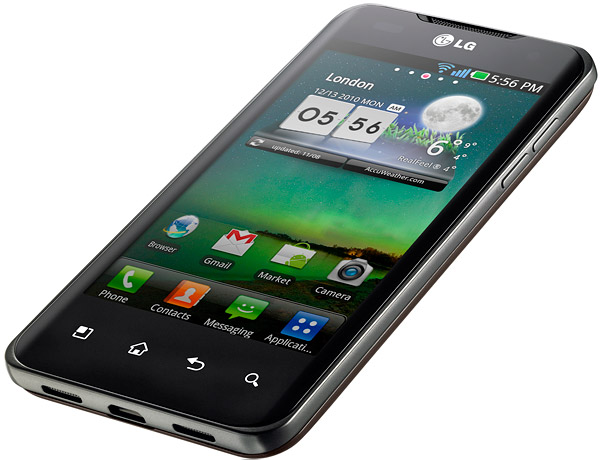
LG Optimus 2X new Android phone with dual core processor

After some silent period, LG released a high end android phone,LG Optimus 2X. it runs with Android v2.2 Froyo OS but it can be easily upgrade to 2.3. this phone has a 4 inch TFT capacitive touchscreen and the screen resolution is 480 x 800 pixels. LG Optimus 2X has a gyro sensor so it will support lots of cool applications in the future.
the internal memory of this phone is 1GB but it supports up to 32GB memory cards.
LG P990 Star has 7.2 HSDPA modem and wi-fi. the main camera of this phone is 8Mp and it supports 720p and 1080p HD video recording. unlike other phones, the front camera of LG Optimus 2X is not VGA. it's a 1.3MP camera which gives high quality output.
LG Optimus 2X runs with a ARM Cortex A9 1GHz dual-core processor and it's a one of the first mobile devices which has a dual core processor. the RAM is 512MB and because of it's hardware, the speed of the phone is unbelievable.
in navigation side, LG Optimus 2X has a GPS receiver with A-GPS support. and it comes with a digital compass. unlike many other phones, LG Optimus 2X has a HDMI port which outputs 720p video. it has very good media player and comes with lots of android applications.

Read rest of entry

12/15/2010

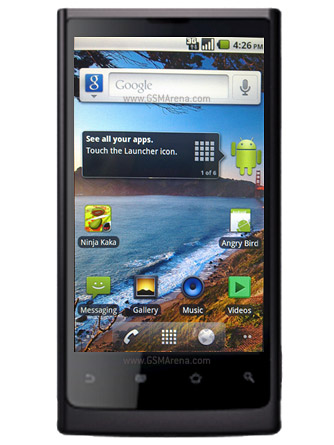
Huawei IDEOS X6 another latest Android

i think most of you know about the Huawei company. they manufacturing wide range of products, specially wireless devices. they have also manufactured several mobile phones but most of them are not popular. there is some strange thing happening in the mobile phone industry, that is lots of new companies has entered to the game. the best examples are Asus and Dell. they already released several mobile phone models. the reason is, there is a highly customizable, open source mobile OS, the Google android. as you know Android becoming very popular, and any company can manufacture a hardware for it.
Huawei named their latest mobile phone IDEOS X6, which runs with Android V2.2 OS. this phone has a 4.1 inch huge TFT display. like many other Android phones,Huawei IDEOS X6 has touch sensitive controls at the bottom. this phone provides Dolby digital sound output, you can even enjoy a movie with it. Huawei IDEOS X6 has 2GB internal memory and supports up to 32GB memory cards.
the main camera of this phone is 5Mp and it supports HD video recording. it comes with a LED flash and supports geo-tagging.
Huawei IDEOS X6 powered by a Qualcomm Snapdragon QSD8255 1 GHz processor and it has 512MB of RAM. it has all regular features in an android phone like GPS,FM radio,digital compass and a youtube player.

Read rest of entry

12/08/2010

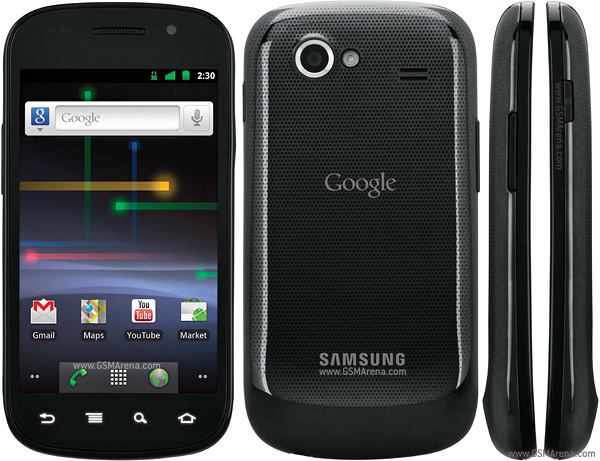
Samsung Google Nexus S has been announced, the latest Android phone

as you know, Google playing a major role in mobile phone industry with their Android OS. previously they released a mobile phone under Google brand, the Google nexus one. it's an amazing, revolutionary phone and even now, nexus one is in the top 10 mobile phone list. Google recently announced the second version of this phone, Google nexus S. this time the hardware manufacturer of this phone is Samsung.
according to their press release, Google going to release this phone at the end of this year. and it's Android version is, v2.3 Gingerbread which released few days ago. the phone powered by a 1Ghz ARM Cortex A8 processor and it has a 512Mb RAM like previous phone.
Google has released couple of pictures of this phone and according to them, it has very nice design. it has rounded corners like iphone and Google Nexus S seems a very thin phone. it has a 4 inch Super AMOLED capacitive touchscreen and the screen resolution is 480 x 800 pixels. there is some special thing with this screen. the glass is called Oleophobic surface which is scratch resistant. also it's not flat, it's a curved glass. the google nexus S also has touch sensitive controls at the bottom of the screen but there is no trackball like in previous version.
Google nexus S has 16GB internal memory and supports up to 32GB memory cards. the main camera of this phone is 5Mp and it supports 720p video recording. there are lots of amazing features of this phone and i will write another blogpost when it released.

Read rest of entry
 

Gadget Guide Copyright © 2009 Gadget Blog is Designed by Ipietoon Sponsored by Online Business Journal